
If you’re already brewing vermicompost tea, you understand its value as a biologically active nutrient delivery system. But there’s a straightforward way to increase both its mineral availability and plant impact: incorporating apple cider vinegar (ACV) and eggshells. This combination creates a bioavailable calcium solution that complements the microbial strength of worm tea, particularly in container systems where nutrient cycling is limited.
Why Eggshells Matter: Calcium Without the Wait
Eggshells are composed of roughly 95% calcium carbonate, a critical element for plant structure and development. Calcium plays a direct role in:
• Cell wall formation (structural integrity)
• Root system development
• Prevention of disorders like blossom end rot
The problem: raw eggshells break down slowly in soil or compost. In a container environment—or even in worm tea—they don’t release calcium quickly enough to meet immediate plant demand.
Why Apple Cider Vinegar Changes the Equation
Apple cider vinegar acts as a mild acid that reacts with calcium carbonate in eggshells, converting it into calcium acetate—a form that plants can absorb almost immediately.
This process delivers two key advantages:
• Accelerated mineral availability (no waiting for decomposition)
• Improved uptake efficiency when applied as a liquid
In effect, you’re pre-processing the calcium outside the plant, so it’s ready the moment it hits the root zone.
The Combined Effect in Worm Tea
When you introduce this calcium solution into your worm tea workflow, you’re stacking benefits across both biological and mineral pathways:
1. Immediate Calcium Delivery
Worm tea already delivers soluble nutrients. Adding calcium acetate ensures plants receive a critical secondary nutrient without delay—especially important for fruiting plants like tomatoes and peppers.
2. Microbial Synergy
Worm tea is rich in beneficial microbes. These organisms help stabilize nutrients and improve root interface activity. When paired with readily available calcium, you get a more balanced rhizosphere environment—supporting both microbial function and plant metabolism.
3. pH Buffering in Containers
Container soils are prone to pH swings due to frequent watering and limited buffering capacity. The addition of calcium helps moderate acidity, while ACV in small, controlled amounts contributes to a more stable nutrient environment overall.
Practical Application: Simple Calcium Boost Recipe
You don’t need a complex setup to implement this:
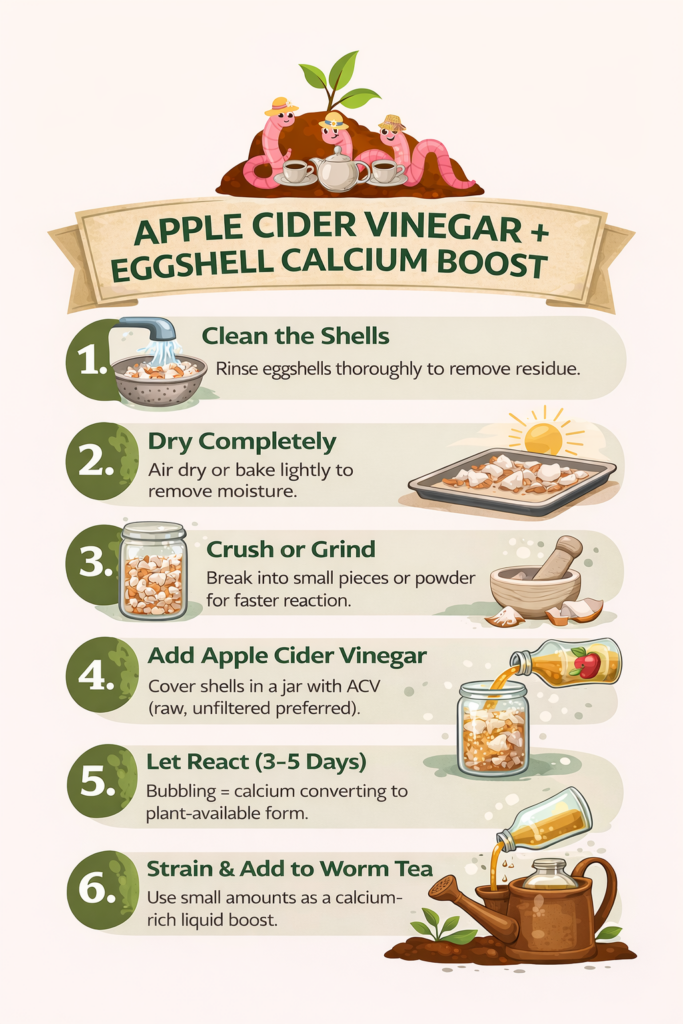
1. Rinse and dry eggshells
2. Crush into small pieces or powder
3. Place in a jar and cover with apple cider vinegar
4. Let sit for 3–5 days (you’ll see bubbling as the reaction occurs)
5. Strain the liquid
6. Add small amounts to your worm tea before application (diluted)
Important: This is a concentrate—use sparingly. A little goes a long way.
Where This Makes the Biggest Impact
This approach is especially effective in:
• Container gardening (limited mineral reserves)
• High-demand crops (tomatoes, peppers, squash)
• Indoor plants where soil ecosystems are constrained
• Recovery scenarios (plants showing calcium deficiency symptoms)
Bottom Line
Worm tea already functions as a high-efficiency delivery system for biology and nutrients. By integrating apple cider vinegar and eggshells, you’re adding a targeted mineral enhancement layer—one that addresses calcium availability in a way traditional compost inputs cannot match.
It’s a low-cost, high-leverage upgrade that aligns perfectly with the goal of worm tea: maximum plant response with minimal waste.