
Worm Tea Party • How‑To Guide
Brew Worm Tea That Plants Actually Love
A practical, beginner-friendly guide to making worm tea (worm casting tea): ingredients, brewing methods, application rates, and fixes for common problems—so you can feed your soil and grow healthier plants naturally.
Start here
What Worm Tea is (and What it Isn’t)
Worm tea is a water-based extract of worm castings that delivers gentle nutrients plus beneficial microbes to the soil. It’s not a harsh fertilizer—and it shouldn’t smell rotten. When brewed and applied correctly, it supports root growth, nutrient cycling, and overall soil life.
Gentle, soil-first nutrition
Microbe boost for the root zone
Great for seedlings & houseplants
Easy to make with basic tools
Why gardeners use it
Benefits you’ll notice in your garden
Before you brew
Tools & ingredients checklist
You can keep this simple. Focus on clean equipment, quality castings, and water that won’t harm microbes.
Worm castings (the base)
Use fresh, earthy-smelling castings. Avoid anything sour, moldy, or overly wet.
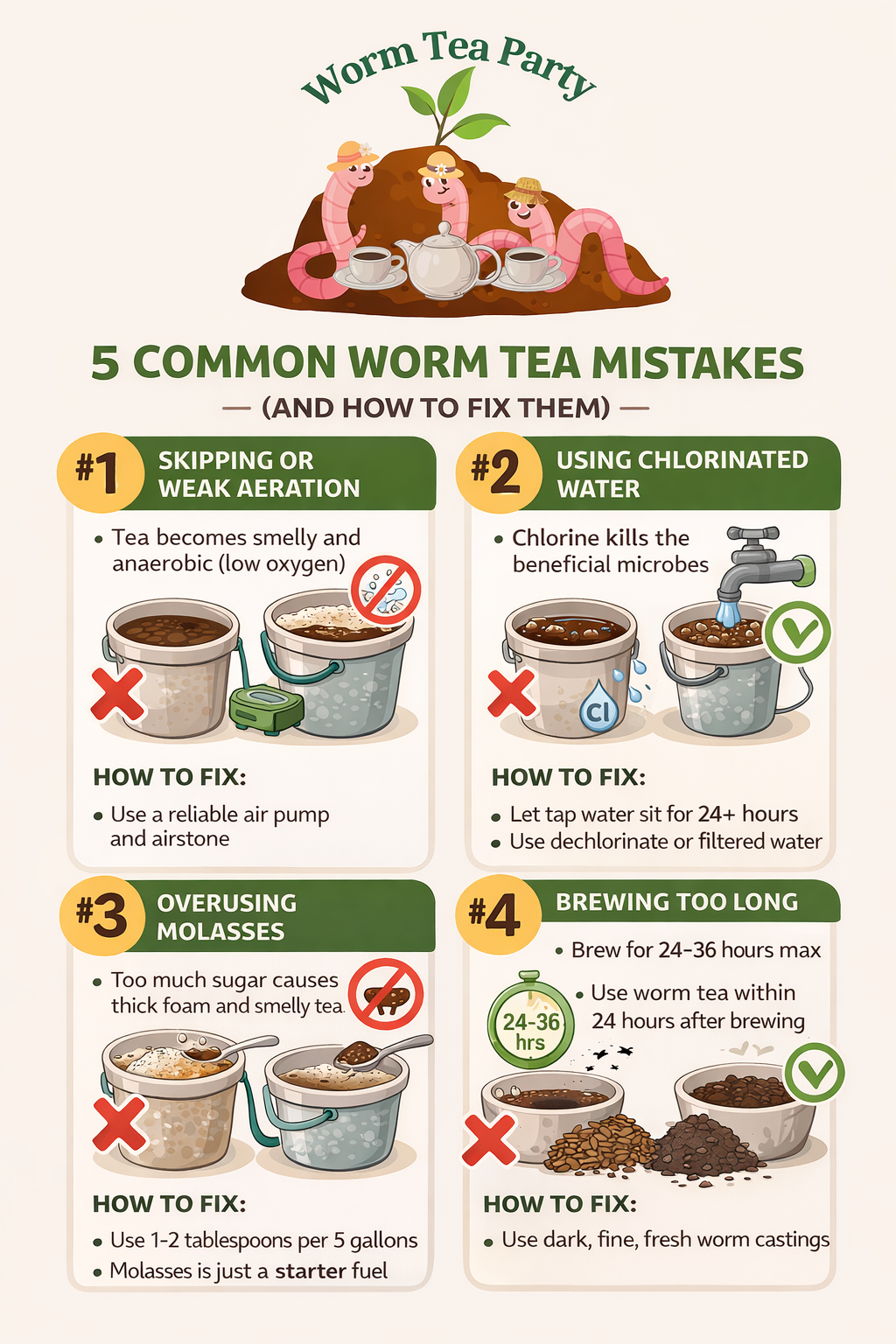
Dechlorinated water
Chlorine/chloramine can reduce microbial activity. Let water sit 24 hours (chlorine) or use filtered/treated water (chloramine).
A brew bag or fine mesh
A paint strainer bag, cheesecloth, or fine mesh keeps solids contained and makes cleanup easy.
Optional: aeration + microbe food
An aquarium pump and air stone for aerated tea; a small amount of unsulfured molasses or kelp can support microbial growth (use sparingly).
#quick-recipe
Quick recipe: 5-gallon batch (beginner friendly)
Use this as a baseline, then adjust based on plant response and your garden schedule.
Step 1: Prep your water
Fill a clean bucket with 5 gallons of dechlorinated water. Aim for room temperature (not hot).
Step 2: Add castings
Add 1–2 cups of worm castings in a brew bag (or directly in the bucket if you’ll strain later).
Step 3: Brew
Needs to be aerated: bubble continuously for 24-36 hours.
Step 4: Strain + use right away
Strain into a watering can or sprayer. Apply the same day for best results. Rinse equipment promptly.
Application rates & timing
Worm tea is gentle. Start light, observe, and repeat—especially for containers and seedlings.
Seedlings
Dilute 1:1 with water. Apply as a light soil drench every 10–14 days.
Houseplants
Dilute 1:1. Water-in monthly during active growth; reduce in winter.
Vegetable beds
Undiluted or 3:1 (tea:water). Drench around roots every 2–4 weeks.
Fruit trees & shrubs
Apply as a soil drench around the drip line 2–3 times per season.
Foliar spray (optional)
Use well-strained tea. Spray early morning/evening; test on a small area first.
After transplanting
Use a light drench to reduce stress and support root establishment.
Hot weather
Apply to soil, not leaves. Water first if soil is very dry.
Consistency
Small, regular applications beat heavy, infrequent doses.