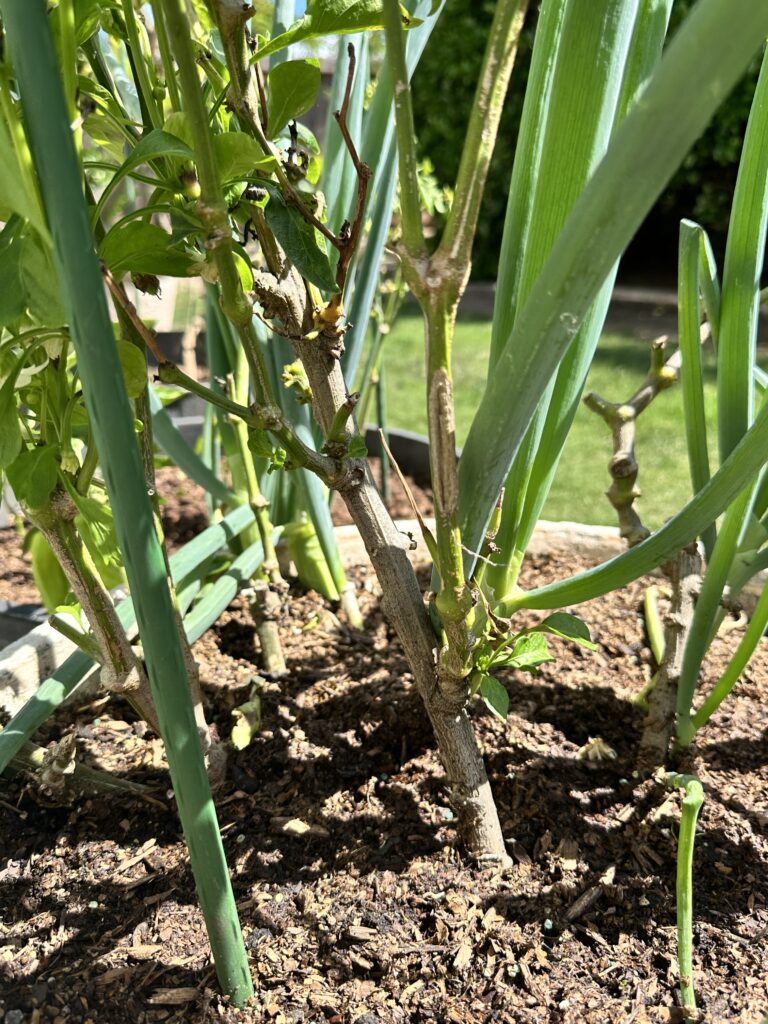
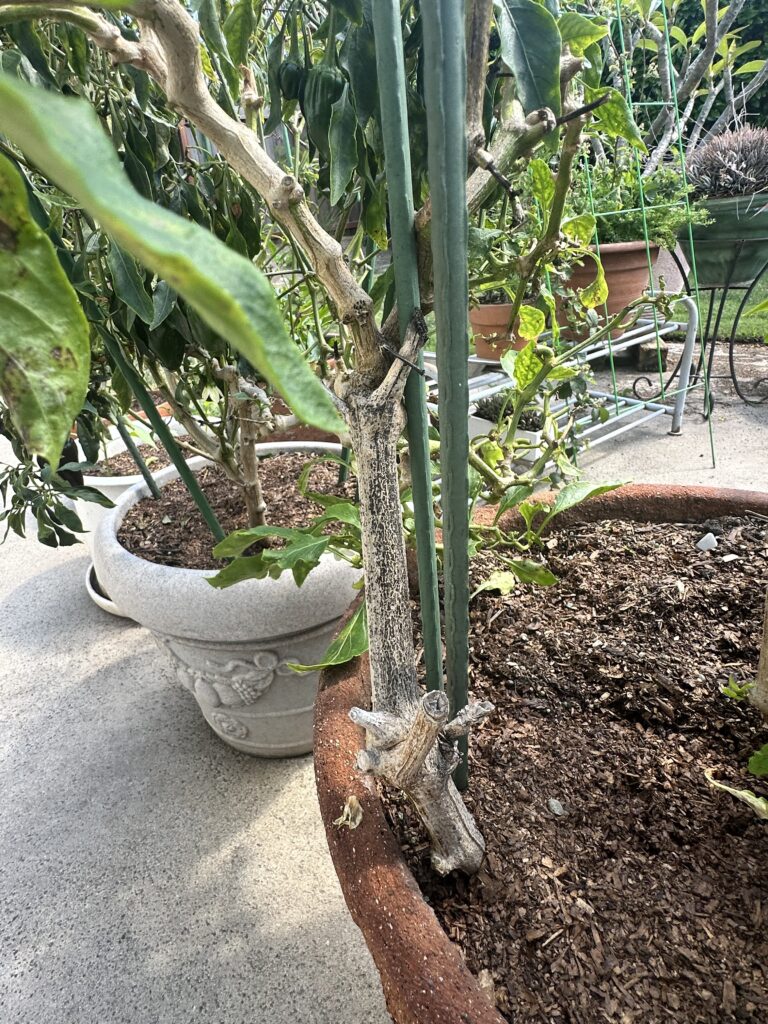
Most gardeners treat pepper plants as short-lived annuals in containers—but that limitation is usually a soil problem, not a plant problem. In a pot, the soil ecosystem collapses over time: nutrients get depleted, microbial diversity drops off, and root zones become compacted and lifeless. What these photos clearly show is the opposite. These 4+ year old plants have developed thick, woody stems over multiple seasons—more like small shrubs than annual vegetables—because the soil has remained biologically active. With the addition of 3-4 inches of potting soil/mulch each year, consistent applications of worm tea reintroduce and sustain beneficial microbes, which continue cycling nutrients, protecting roots, and maintaining structure in a confined environment where that system would otherwise break down.
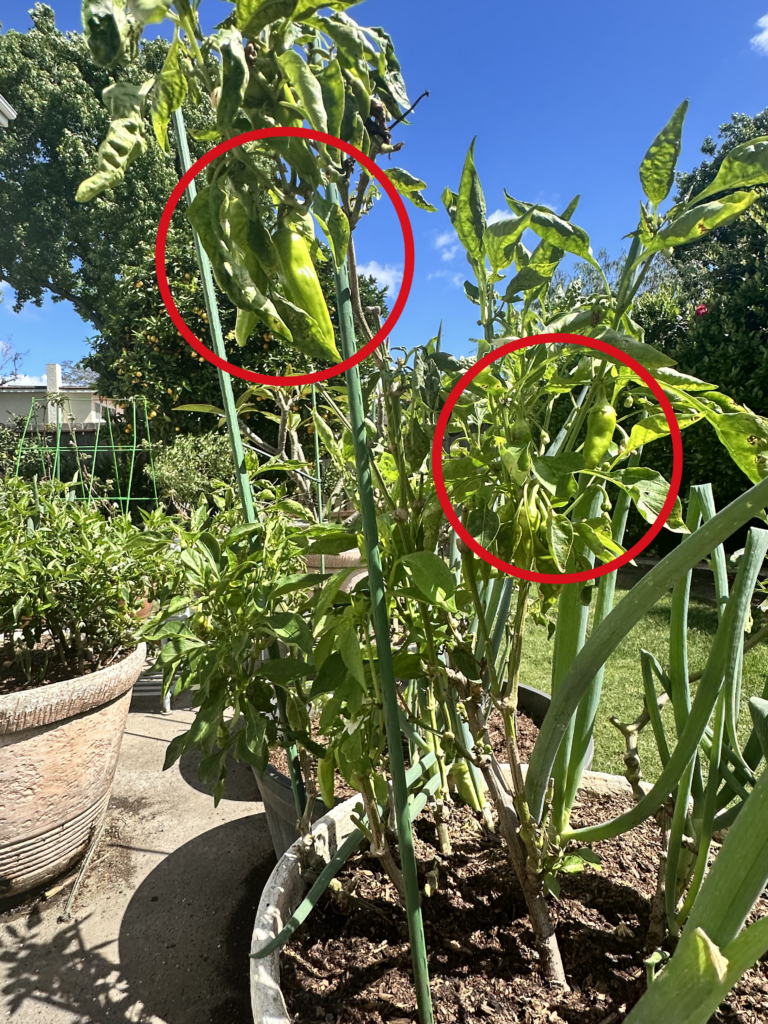
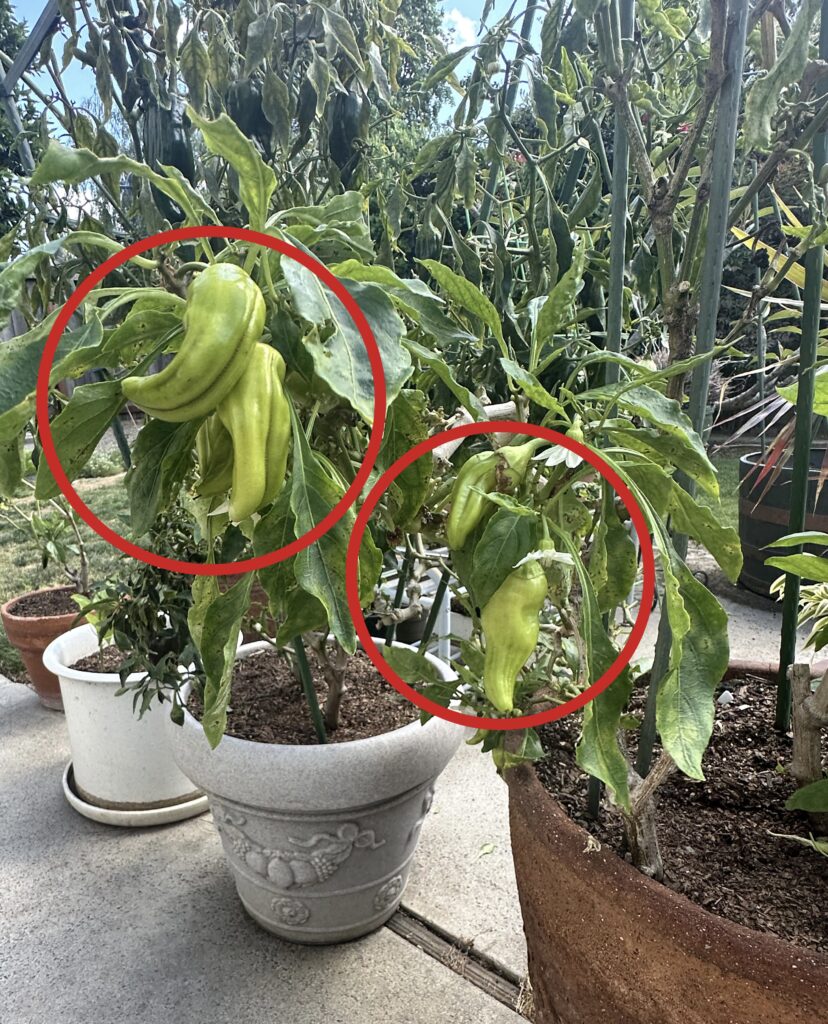
(And this production is only early Spring, before the weather brings the heat in which pepper plants produce abundantly.)
The takeaway is straightforward but often overlooked: longevity in potted plants is directly tied to soil biology, not just watering or fertilizing schedules. When you consistently apply worm tea, you’re not just feeding the plant—you’re preserving the entire ecosystem that makes long-term growth possible. With that system intact, pepper plants don’t follow the typical one-season lifecycle; they mature, adapt, and continue producing well beyond expectations. Your plants are a working example that with the right microbial support, a container doesn’t have to be a limitation—it can sustain productivity for years.